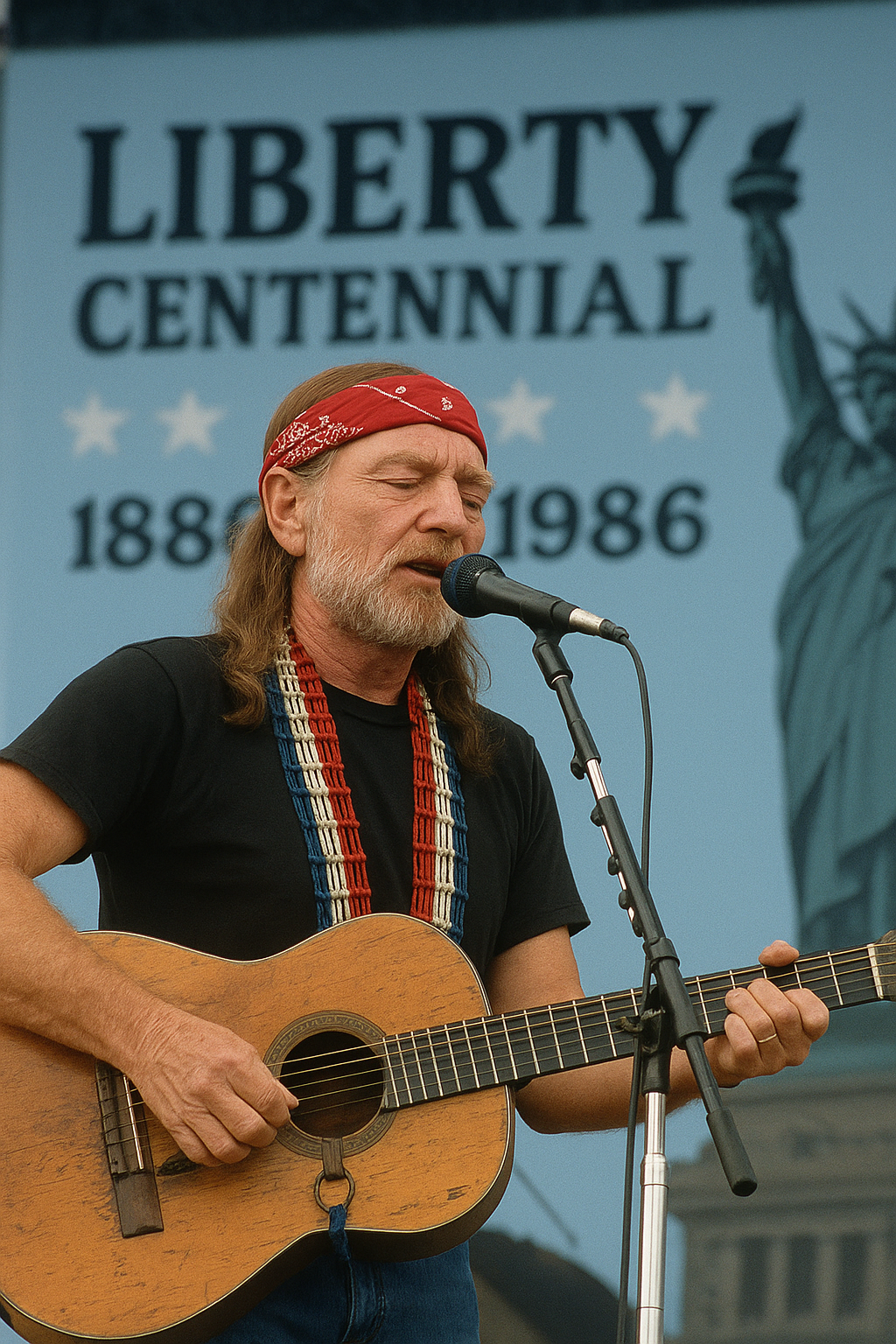
Willie Nelson’s ‘Promiseland’ became a symbol of patriotism during the Statue of Liberty’s centennial in 1986.
In 1986, Willie Nelson’s album ‘Promiseland’ resonated with audiences across America, reaching the top of the charts. The album’s themes of hope and unity struck a chord during a time when the nation was celebrating the 100th anniversary of the Statue of Liberty.
Nelson’s work, known for its blend of country and folk influences, carried a message that aligned with the spirit of the centennial celebrations. The Statue of Liberty, a symbol of freedom and immigration, was at the heart of national festivities, and ‘Promiseland’ provided a fitting soundtrack.
The album’s success was not only a testament to Nelson’s artistry but also reflected the cultural and political climate of the time. As America reflected on its immigrant roots, Nelson’s music offered a narrative of inclusivity and hope.
During this period, Nelson’s prominence in the music industry was further solidified. His ability to capture the essence of American values through his music made him a beloved figure, and ‘Promiseland’ became an anthem for many.
While the album’s impact was significant in 1986, its themes continue to resonate today. Nelson’s work remains a reminder of the power of music to unite and inspire.
The celebration of the Statue of Liberty’s centennial was a moment of reflection for the nation. Willie Nelson’s ‘Promiseland’ played a crucial role in this cultural milestone, highlighting the enduring connection between music and national identity. As the country celebrated its history and diversity, Nelson’s album provided a soundtrack that captured the essence of the American dream.